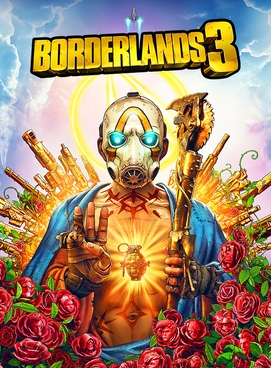
The Weight of Expectation: Following Borderlands 2's Legacy
The anticipation surrounding a new Borderlands game launch is always palpable, a unique blend of excitement and immense pressure for its creators. For Gearbox Software, the journey to bring Borderlands 3 to life was profoundly shaped by the towering legacy of its predecessor, Borderlands 2. Released to critical acclaim, Borderlands 2 set a high bar, captivating players with its irreverent humor, distinctive cel-shaded art style, and an endless stream of loot.
Upon its launch, Borderlands 2 plunged players back into the anarchic depths of Pandora, tasking them with thwarting the villainous Handsome Jack and rescuing the original Vault Hunters. The game introduced a memorable roster of playable characters, each with distinct abilities: the dual-wielding Gunzerker Salvador, the elemental Siren Maya, the stealthy Assassin Zer0, and the turret-deploying Commando Axton. Beyond its compelling narrative, Borderlands 2 refined its core gameplay loop with an enhanced mission system, diverse environments, a highly customizable weapon system featuring procedurally generated firearms, and robust cooperative multiplayer options, both online and via LAN.
This success meant that when Gearbox began conceptualizing Borderlands 3, they weren't starting from a blank slate. Instead, they inherited a rich franchise with deeply ingrained fan expectations – a joy, certainly, but also a significant weight. The initial phase of development, as described by the team, wasn't about building a new world from scratch, but about framing those expectations into innovative ideas that would honor the past while pushing the series forward.
From Concept to Code: Forging New Frontiers in Pandora
The inception of Borderlands 3 began with brainstorming sessions, transforming abstract fan desires into concrete gameplay mechanics. When key development personnel joined Gearbox in mid-2015, the team embarked on a mission to evolve the core Borderlands experience without losing its soul. Early discussions centered on ambitious concepts that would eventually become hallmarks of Borderlands 3. These included:
- Multiple Action Skills for Vault Hunters: A significant departure from previous titles, offering players unprecedented customization and tactical depth.
- Manufacturer Differences Impacting Gameplay: Moving beyond mere statistical variations, guns from different manufacturers would offer unique firing modes, elemental effects, or utility functions, making weapon choice more strategic.
- Real Physics: Enhancing environmental interaction and weapon feedback for a more immersive and reactive world.
- Refined Elemental Damage Types: Expanding the elemental system to create more dynamic combat encounters.
- Removing Co-op Roadblocks: Streamlining the multiplayer experience to ensure friends could effortlessly jump into the action together, regardless of their progress or level.
Many of these nascent ideas, born from intense collaboration and creative passion, ultimately found their way into the final game, shaping the unique identity of Borderlands 3. This iterative process of ideation and refinement is a testament to the team's commitment to innovation within the established Borderlands framework.
The Unreal Engine 4 Transition: A New "Way" to Build Borderlands
One of the most monumental undertakings during Borderlands 3's development was the decision to switch to Unreal Engine 4 in August 2016, a little over a year into the project. For any large-scale game, changing engines mid-development is akin to rebuilding an aircraft while it's in flight. This wasn't merely an upgrade; it necessitated a fundamental shift in how the game was being made.
The implications of this move were profound. Entire pipelines for art assets, level design, animation, and coding had to be re-evaluated and restructured. Tools previously optimized for older engine versions became obsolete, requiring developers to learn new workflows and adapt to a completely different technical environment. This transition meant that Gearbox wasn't just creating a new Borderlands; they were creating a new Borderlands in a new way, simultaneously adapting to an unfamiliar technological landscape.
Concurrently with the engine switch, the development team also underwent significant expansion. A project as ambitious as Borderlands 3 demanded a unified, large-scale effort. While Unreal Engine 4 offered incredible power, flexibility, and graphical capabilities, allowing for more detailed environments, sophisticated physics, and advanced visual effects that would ultimately benefit the player experience, the immediate challenge was immense. Developers, artists, and designers had to quickly onboard to new systems, often while trying to meet tight deadlines. This period was undoubtedly a crucible, testing the mettle and adaptability of every team member involved.
The Human Element: Overcoming Development Hurdles Together
Describing the process of game development as simply "challenging" often sanitizes the true emotional and professional journey a team undertakes. As the developers themselves acknowledged, the word "challenge" barely scratches the surface of the intense period of change and adaptation they faced. When a large team undergoes such a radical shift in methodology and technology, individual differences in thought, ideas, and preferred workflows can lead to difficult times. Miscommunications can occur, established routines are disrupted, and the pressure to deliver a worthy successor to Borderlands 2 amplifies every obstacle.
Yet, what truly propelled the Gearbox team through these trials was a singular, shared purpose: to create a joyous experience for the players. This collective passion served as the ultimate motivator, fostering camaraderie and a deep respect among colleagues. The development of Borderlands 3 was undeniably a labor of love, requiring immense dedication, compromise, and a willingness to push through adversity. It wasn't always "rainbow memories and sunshine," but the underlying desire to craft an exceptional game for the fans provided the necessary impetus to overcome every hurdle.
This human element—the shared struggle and ultimate triumph—is crucial to understanding the quality of a game like Borderlands 3. It highlights that behind the pixels and polygons are real people pouring their talent, time, and heart into their creation. For players, understanding this journey can deepen their appreciation for the intricate design and seamless gameplay they often take for granted.
More Than Just a Game: The Vision for Player Joy and Future Expansion
Ultimately, the developers' passion for Borderlands 3 stemmed from a profound desire to provide an escape. They wanted players to forget the difficulties of their own lives, if only for a few hours, to laugh, to smile, and to share those moments of pure fun with friends. This core philosophy guided every design decision, from the chaotic gunplay to the memorable characters and the vibrant, ever-evolving world of Pandora and beyond.
The borderlands game launch for the third installment was not just the culmination of years of hard work, but also the beginning of a new chapter for the franchise. The team expressed excitement about extensive post-launch content, promising that the initial release was just the start of a much larger journey. This commitment to ongoing support and new adventures is a testament to the franchise's enduring popularity and its capacity for growth.
Moreover, the universe of Borderlands is proving its appeal extends beyond the gaming world. Whispers and concrete plans have long indicated that Gearbox's beloved series is making the leap to the big screen, a testament to the rich lore, captivating characters, and unique aesthetic that define Borderlands. This expansion into other media, as discussed in Beyond the Game: Borderlands Franchise Eyes the Big Screen, underscores the broad cultural impact of the series and the vast potential for its future.
In conclusion, Borderlands 3's journey from initial concepts to a full-fledged borderlands game launch was a complex tapestry woven with innovation, technical challenges, and unwavering human dedication. It stands as a powerful example of how a passionate team, facing immense pressure and significant obstacles like an engine transition, can come together to deliver a worthy successor that not only meets but often exceeds the high expectations of a dedicated fanbase, all driven by the desire to bring joy and escapism to millions.